
Free Educational Resource
Understanding Foreclosure
Facing foreclosure is overwhelming — but knowledge is your most powerful tool. There are real options available to you. If you need a guide to walk you through the stages and more reach out for a conversation. It's free.
You Are Not Alone
Millions of American homeowners have faced foreclosure. It does not happen overnight, and at almost every stage there are actions you can take to protect yourself. Whether you are one payment behind or already received a Notice of Default, this guide is here to help you understand exactly where you stand — and what you can do next.
The Foreclosure Process, Stage by Stage
Foreclosure follows a legal process that typically takes months. Here is what happens at each stage.
Missed Payments
Days 1–90After one missed payment your lender will contact you. After 90 days of missed payments, your loan is considered in default. This is the time to act — contact your lender or a HUD-approved housing counselor immediately. Many lenders prefer to work out a solution rather than pursue foreclosure.
Notice of Default (NOD)/ Lis Pendens
Around Day 90–120Your lender files a Notice of Default with the county recorder's office. This is a formal legal notice that the foreclosure process has begun. You typically have 30–90 days after this notice to bring your loan current or negotiate an alternative. This notice is public record.
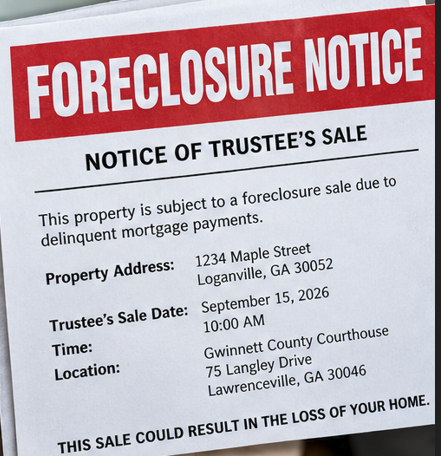
Notice of Trustee's Sale
30–90 days after NODIf the default is not resolved, the lender schedules a foreclosure sale and files a Notice of Trustee's Sale. This notice must be published and posted. You still have options at this stage — including requesting a loan modification, filing for bankruptcy protection, or selling the home.
Foreclosure Sale (Auction)
Typically 21+ days after Notice of SaleThe property is sold at a public auction to the highest bidder. If no one bids above the outstanding loan balance, the lender takes ownership and the property becomes REO (Real Estate Owned). In some states you may have a redemption period after the sale.
Eviction
After the sale is finalizedOnce the sale is complete and title transfers, the new owner can begin eviction proceedings if you have not vacated. Some states require a formal eviction process with advance notice. Understanding your state's rules can give you additional time to make arrangements.
Your Rights as a Homeowner
Federal and state laws give you important protections throughout the foreclosure process.
Right to Be Notified
Lenders are legally required to notify you before starting foreclosure proceedings. Under federal law, they generally cannot begin foreclosure until you are more than 120 days past due, giving you time to explore alternatives.
Right to Request Loss Mitigation
You have the right to apply for loss mitigation options — such as a loan modification, repayment plan, or forbearance — before foreclosure can proceed. Your servicer must review a complete application before moving forward with a sale.
Right to a HUD-Approved Counselor
You have the right to speak with a free, HUD-approved housing counselor at any point. These counselors can review your situation, explain your options, and help you communicate with your lender — at no cost to you.
Right to Dispute Errors
If you believe your lender made an error — such as misapplying a payment or charging improper fees — you have the right to dispute it in writing. Servicers must acknowledge your inquiry within five business days and respond within 30.
Right to Remain in Your Home
You have the right to remain in your home until the foreclosure process is legally complete and a court or trustee has transferred title. No one can force you to leave before that point without following the proper legal eviction process.
Your Options — There Are More Than You Think
Foreclosure is rarely the only path. Here are the most common alternatives, from least to most disruptive.
Loan Modification
Your lender may agree to permanently change the terms of your loan — lowering your interest rate, extending the repayment period, or adding missed payments to the end of your loan. This is often the first option to explore if you have steady income.
Forbearance Agreement
A forbearance temporarily reduces or pauses your mortgage payments while you recover from a financial hardship. You will need to repay the paused amounts later, but it can give you breathing room to stabilize your situation.
Repayment Plan
If you have missed several payments but your income has stabilized, your lender may allow you to spread the overdue amount across future payments. This brings your loan current over time without requiring a lump sum.
Sell Your Home
If you have equity in your home, selling before the foreclosure sale allows you to pay off your mortgage and walk away with remaining proceeds. Even a quick cash sale can be better than losing the home at auction with nothing to show for it.
Short Sale
If you owe more than your home is worth, your lender may agree to accept less than the full balance as payment in full. A short sale avoids foreclosure on your record and can be less damaging to your credit than a completed foreclosure.
Deed in Lieu of Foreclosure
You voluntarily transfer ownership of your home to the lender in exchange for being released from your mortgage obligation. This avoids the public foreclosure process and can sometimes include a cash-for-keys agreement to help with relocation.
Bankruptcy Protection
Filing for bankruptcy triggers an automatic stay that immediately halts foreclosure proceedings. Chapter 13 bankruptcy can allow you to catch up on missed payments over three to five years while keeping your home. Consult a bankruptcy attorney to understand if this is right for your situation.
Foreclosure Terms, Explained Simply
The foreclosure process comes with a lot of legal language. Here are the most common terms you will encounter.
- Default
- Failing to meet the legal obligations of your mortgage — most commonly, missing payments. A loan is typically considered in default after 90 days of missed payments.
- Notice of Default (NOD)
- A formal legal document filed by your lender with the county recorder's office, officially starting the foreclosure process. It is public record.
- Loss Mitigation
- Any option that helps a borrower avoid foreclosure — including loan modifications, repayment plans, forbearance, short sales, and deeds in lieu.
- Reinstatement
- Paying all overdue amounts, fees, and costs in a lump sum to bring your loan current and stop the foreclosure process. Most states allow reinstatement up until a few days before the sale.
- Redemption Period
- In some states, a period after the foreclosure sale during which the original homeowner can reclaim the property by paying the full sale price plus costs.
- Deficiency Judgment
- If your home sells at auction for less than you owe, the lender may sue you for the difference. Some states limit or prohibit deficiency judgments — check your state's laws.
- REO (Real Estate Owned)
- Property that has been foreclosed on and is now owned by the lender after failing to sell at auction.
- Trustee's Sale
- The public auction at which a foreclosed property is sold to the highest bidder. Also called a foreclosure sale or sheriff's sale depending on the state.
Ready to Talk Through Your Options?
Every situation is different. Our team will listen to yours — no pressure, no judgment, just honest guidance.